Jun
29, 2026
International Visitors to the eHUB
Early-career researchers visit the emergenCITY real-world lab on the Lichtwiese campus on the initiative of KIT



Early-career researchers visit the emergenCITY real-world lab on the Lichtwiese campus on the initiative of KIT
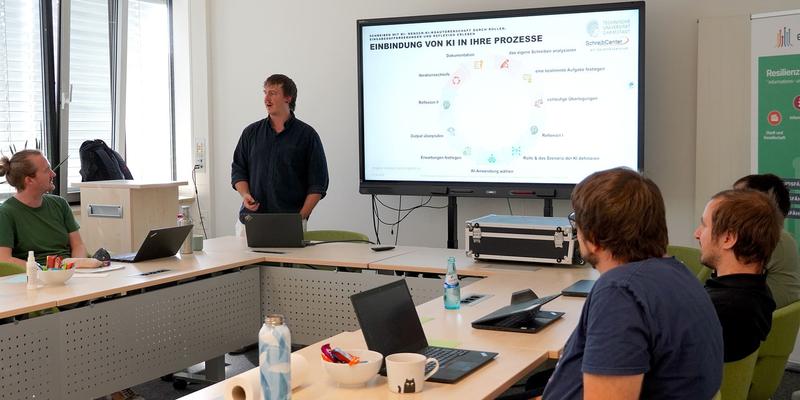
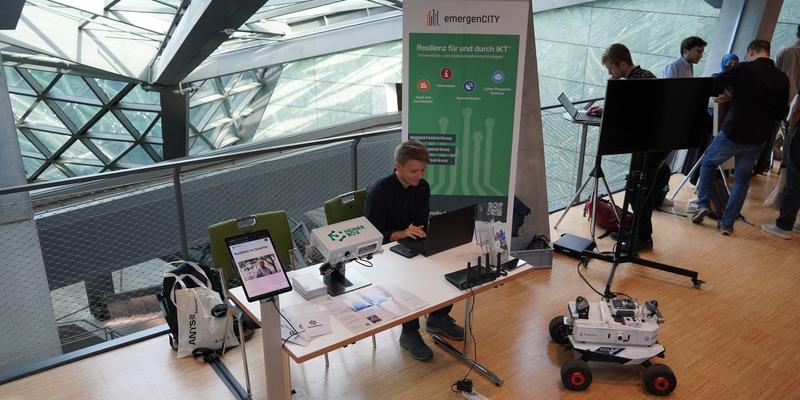
Young scientists from around the world came to TU Darmstadt on June 24. Together with researchers from the Karlsruhe Institute of Technology (KIT), they toured the eHUB, an energy-self-sufficient building that emergenCITY uses to research how smart-home technologies and the exchange of energy and information could operate in the event of a crisis.
emergenCITY Managing Director Katharina Kleinschnitger, emergenCITY Principal Investigator Annette Rudolph-Cleff, Professor of Design and Urban Development at TU Darmstadt, and Joachim Schulze, Head of the Real-World Labs at the DiReX Application and Transfer Center, presented how sustainable urban development, climate adaptation, and digital resilience are interconnected.
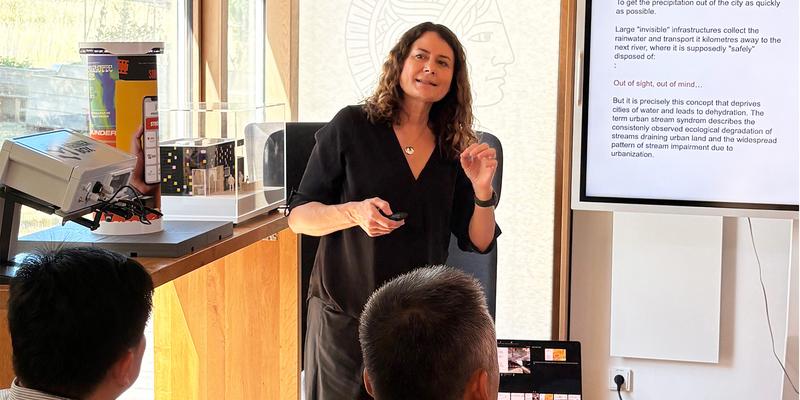
Annette Rudolph-Cleff highlighted the role of climate topics in urban planning: She explained the connection between historical flood protection measures and heat islands, why the “Urban Stream Syndrome” contributes to the formation of heat islands, and why sustainable urban landscape design is of particular importance today in light of climate change.
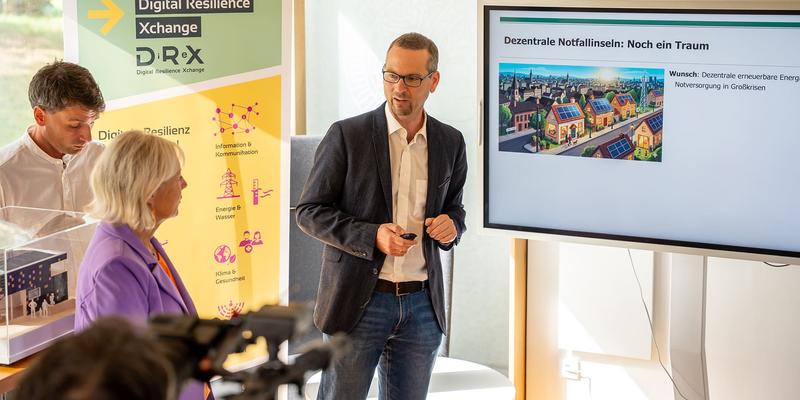
Joachim Schulze presented real-world demonstration projects and explained to the interested guests not only the eHUB real-world laboratory but also how the [Litfaßsäule 4.0] (https://digital-resilience-xchange.de/demonstratoren/litfassaule-4-0-verlassliche-krisenkommunikation-auch-ohne-strom/) and the Heinerboxes are tested on site in one of Darmstadt’s neighborhoods.
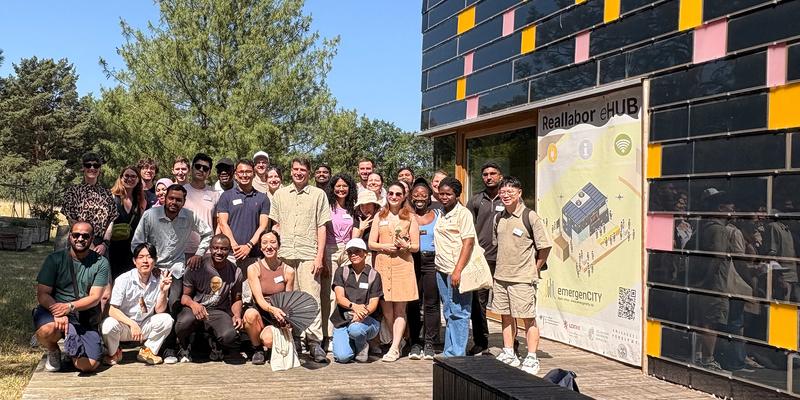
For the young researchers, the visit was part of a summer school they attended as part of their recognition as “Digital GreenTalents”. The award, presented by the Federal Ministry of Research, Technology, and Space (BMFTR), is organized by the Project Management Agency Karlsruhe at KIT and granted to 20 selected researchers.
The award-winning early-career researchers from India, Morocco, Canada, Malaysia, Benin, and many other countries focus their research themselves on topics such as climate change, energy technologies, and urban planning, as well as Artificial Intelligence, machine learning, and data analysis.