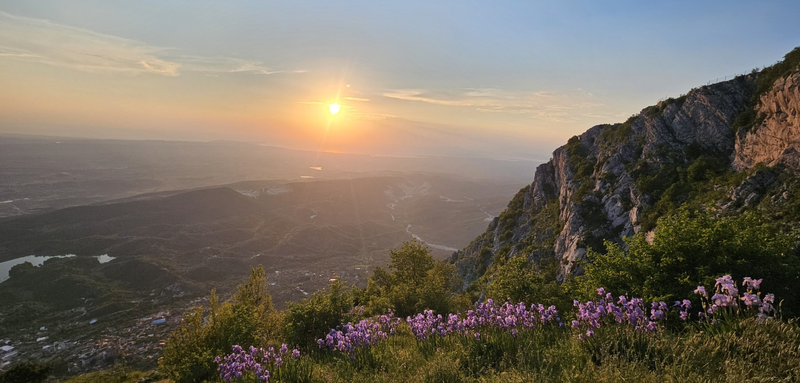
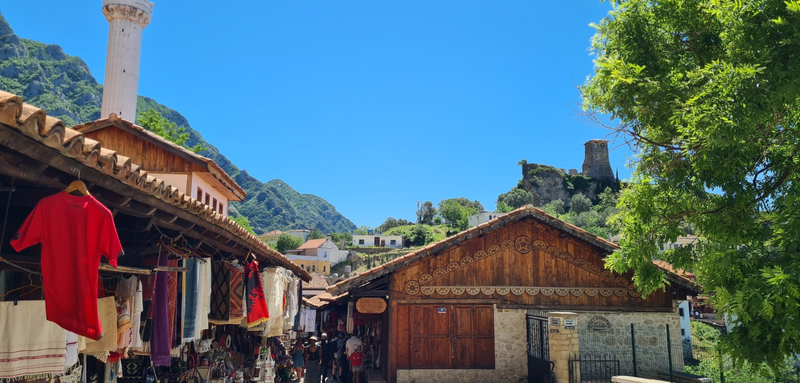
From May 25 to 29, 2026, the historic city of Krujë in Albania hosted the 7th SLSIP Workshop (Statistical Learning for Signal and Image Processing). The European workshop series, which began in Helsinki in 2018, is dedicated to developing robust, data-driven methods for signal and image processing and to interdisciplinary exchange across national borders. emergenCITY has supported the initiative since its third edition in 2021 and views it as a contribution to the next generation of resilient systems.
The workshop once again focused on a range of highly topical themes: statistical learning for robust signal processing and control, biomedical signal and image processing, statistical modeling of sparse, complex, and multisensor data, graph theory for signal processing in dynamic and large networks, and distributed optimization for intelligent systems. Applications ranged from neuroscience to electrical systems to array signal processing.
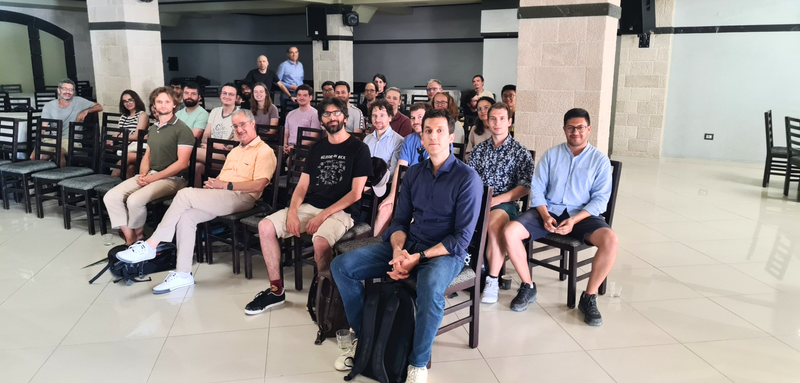
Around 50 doctoral candidates, postdocs, and other early-career researchers took part, including emergenCITY PhD student Christoph Löser and associated PhD student Taulant Koka. The workshop offered them a platform for intensive collaboration and networking. The program combined one-hour talks, short talks, and open discussion sessions to foster new contacts and shared research ideas.
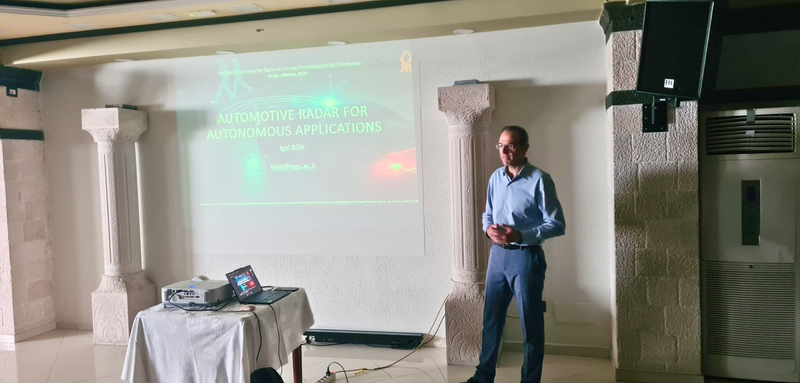
This year, emergenCITY funded the plenary talk by Igal Bilik (Ben-Gurion University of the Negev), who was invited to the workshop by Michael Muma. In “Statistical Signal Processing for 4D Imaging Radar-based Autonomous Applications,” Bilik spoke about the shift from model-based statistical signal processing toward data-driven deep learning architectures in automotive radar perception. Classical, statistically grounded methods such as CFAR detection, direction-of-arrival (DOA) estimation, and Kalman filtering reach their limits once modern 4D imaging radars — capturing range, Doppler, azimuth, and elevation — come into play, since the high dimensionality and sparsity of the data overwhelm conventional estimators. Bilik showed how the statistical learning framework can be applied to key radar tasks, such as distributed target detection, semantic segmentation of radar point clouds, high-performance sensing with low-cost hardware, and the fusion of radar and camera data as well as cooperative sensing across networked radar systems. He concluded by comparing radar and LiDAR, emphasizing that it is precisely radar’s statistical robustness that enables reliable, weather-independent perception — a capability directly relevant to resilient sensing in crisis situations, and thus one that touches on a core concern of emergenCITY.
Also invited by Michael Muma, and funded through his ERC Starting Grant, Reinhard Heckel (TU Munich) spoke in “Learning to Reconstruct, Learning to Discover” about the shift from hand-designed to data-learned algorithms. While signal and information processing methods were traditionally designed by hand, many of today’s most powerful approaches — particularly in image reconstruction — are learned from data. Heckel first presented his own work on learning efficient reconstruction algorithms, and then explained how LLM-based agents can help find new solutions to long-standing algorithmic challenges in signal and information processing.
The workshop was co-organized by Michael Muma, Principal Investigator at the LOEWE Center emergenCITY and head of the Robust Data Science Group at TU Darmstadt. Taulant Koka served as Local Chair and was responsible for the outstanding local organization of the SLSIP Workshop in Krujë, from smooth logistics to a varied social program. His strong commitment played a major part in making the workshop an exceptional scientific and personal experience for all participants. On behalf of everyone involved, we would like to warmly thank Taulant Koka for this successful gathering.