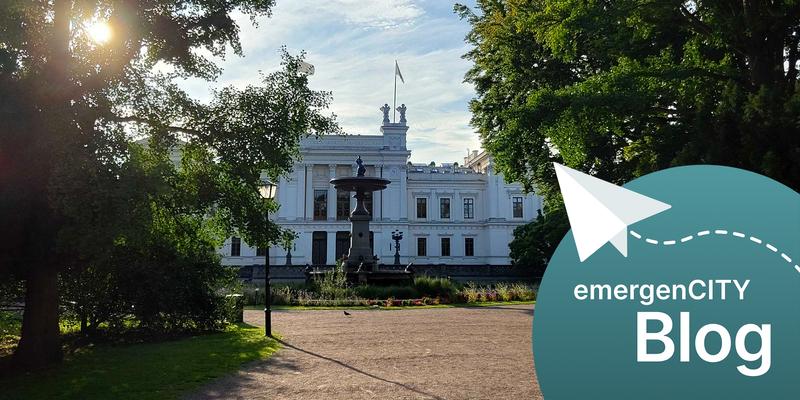
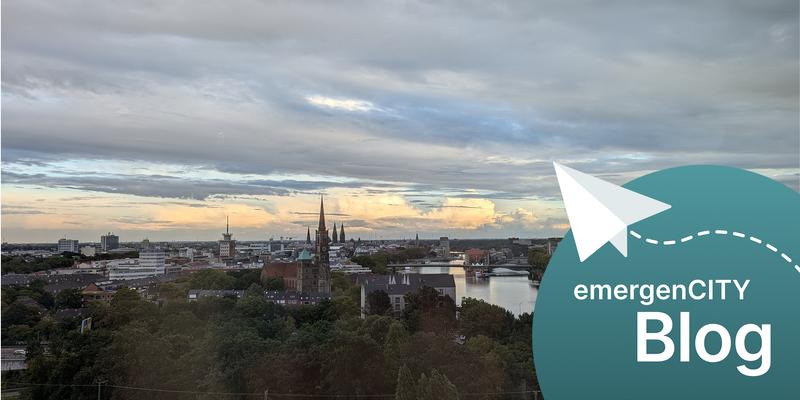
Ever since I began my doctoral studies, I had hoped to spend a research stay at a university abroad, and emergenCITY supported me in this endeavor. I was able to conduct research from August 2025 to March 2026 under the supervision of Professor Anders Rantzer at the Department of Automatic Control at Lund University of Technology.
I quickly found my place in the group in Lund and focused on interesting research questions related to emergenCITY’s research topics that build upon and expand my previous research: the control of large and networked systems. Professor Rantzer’s group has long been conducting research on the scalable control of complex systems, and I was able to benefit greatly from their existing expertise. A paper titled “Model Predictive Control for Constrained Linear Positive Systems on Graphs,” co-authored with a doctoral student from Lund, was published in IEEE Control Systems Letters in early June. Another paper is currently being prepared for submission.
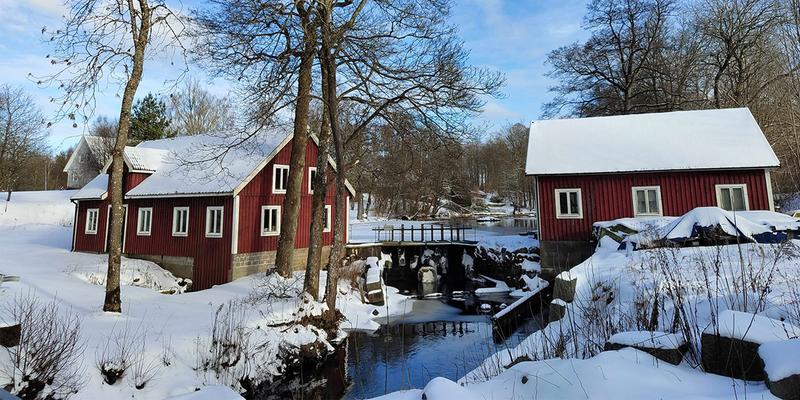
Of course, during my eight-month stay, I also had many personal highlights. Whenever the weather permitted, I explored Skåne—the Swedish region where Lund is located—on foot during many hikes. I particularly enjoyed the island of Ven, Söderåsen National Park, the Falsterbo Peninsula, and the hilly region around the town of Brösarp, where parts of the film adaptation of Astrid Lindgren’s “The Brothers Lionheart” were shot. There are also several cities to explore in the region, most notably the two major cities of Malmö and Copenhagen in Denmark. But many of the region’s smaller towns also have their own charm, such as Lund itself, with its medieval town center, as well as Ystad and Helsingborg.
Life in Sweden—both professionally and personally—is not fundamentally different from life in Germany. However, there are small differences and details that stand out during a longer stay, and it was exciting to experience everyday life in another country. One difference, for example, is that the university generally operates a bit differently than in Germany. I think people there are a bit more relaxed, and it’s important for the university that all employees have a good work-life balance. For example, every Monday during work hours, we played an hour of “Innebandy” (floor hockey) with our colleagues. In addition, there’s a “fika” (coffee break) organized by the institute twice a day, at 10 a.m. and 3 p.m., which all employees usually attend. Every Friday afternoon, pastries were ordered to go with coffee. I wasn’t used to that from Germany, but it certainly made for a very pleasant work environment.
It was a wonderful and educational time that I wouldn’t want to have missed for anything during my doctoral studies.
About the Author
Roland Schurig is a researcher in the Control and Cyber-Physical Systems group of the Department of Electrical Engineering and Information Technology at TU Darmstadt. His research focuses on complexity reduction in the control of complex systems. At emergenCITY, he conducts research for the Cyber-Physical Systems program area.
Paper
R. Schurig, D. Ohlin, A. Rantzer, E. Tegling and R. Findeisen, “Model Predictive Control for Constrained Linear Positive Systems on Graphs”, in IEEE Control Systems Letters, vol. 10, pp. 481-486, 2026.